New Year, also known as the Spring Festival (春节, Chūnjié), is one of the most significant cultural celebrations in China and among Chinese communities worldwide. Rooted in centuries-old traditions, it is a time of renewal, family gatherings, and symbolic customs. My journey of living and exploring China has granted me and my family the opportunity to witness this vibrant festival firsthand, deepening our appreciation for its cultural richness.

The Essence of Chinese New Year
Chinese New Year marks the beginning of the lunar calendar, typically falling between late January and mid-February. The festival lasts 15 days, culminating in the Lantern Festival. It is a time for family reunions, honoring ancestors, and expressing hopes for prosperity in the coming year.
Preparations for the New Year begin weeks in advance. Homes are cleaned to sweep away bad luck, and decorations like red couplets and paper cuttings adorn doors and windows to invite good fortune. Red is a dominant color, symbolizing happiness and prosperity.
On New Year’s Eve, families gather for a reunion dinner (团圆饭, tuányuán fàn), considered the most important meal of the year. Dishes served during this feast are laden with symbolism. For instance, fish (鱼, yú) represents surplus and abundance, while dumplings (饺子, jiǎngzi) symbolize wealth due to their resemblance to ancient Chinese gold ingots.
The Chinese Zodiac: Animals of the Calendar
The Chinese zodiac (生肖, shēngxiào) is a 12-year cycle, with each year represented by an animal. These animals are Rat, Ox, Tiger, Rabbit, Dragon, Snake, Horse, Goat, Monkey, Rooster, Dog, and Pig. Each animal embodies unique characteristics and attributes, influencing the personality and fortune of individuals born under their sign.
For example, the Rat symbolizes intelligence and adaptability, while the Dragon is often associated with ambition and energy. 2025 is the year of the Snake, representing wisdom, intuition, and elegance. Those born in the year of the Snake are often thought to possess a deep sense of perception and an enigmatic charm. The zodiac is deeply ingrained in Chinese culture, playing a role in matchmaking, career choices, and even naming conventions.
Experiencing Chinese New Year in China
Living in China has allowed me to experience the festival beyond its surface celebrations. The streets come alive with vibrant markets selling New Year’s goods, from red lanterns to traditional snacks. Fireworks light up the sky, symbolizing the warding off evil spirits and welcoming good luck.
One of my most cherished memories is participating in the annual dragon dance. The rhythmic drumming and the coordinated movements of the performers bring to life the mythical creature, symbolizing strength and good fortune. Additionally, I’ve had the privilege of sharing meals with local families and experiencing the warmth and hospitality that define Chinese culture.
Exploring rural areas during the festival has offered unique perspectives. In some regions, traditional practices like the worship of the Kitchen God (灶神, Zào Shén) remain integral to the celebrations. These rituals provide a glimpse into the deep spiritual roots of Chinese New Year.
Reflections on a Cultural Journey
Living in China has been an enriching journey, especially during Chinese New Year. The festival’s emphasis on family, renewal, and gratitude resonates universally, making it a time of connection and reflection. It has also deepened my understanding of the values embedded in Chinese culture—respect for tradition, the importance of community, and the aspiration for a better future.
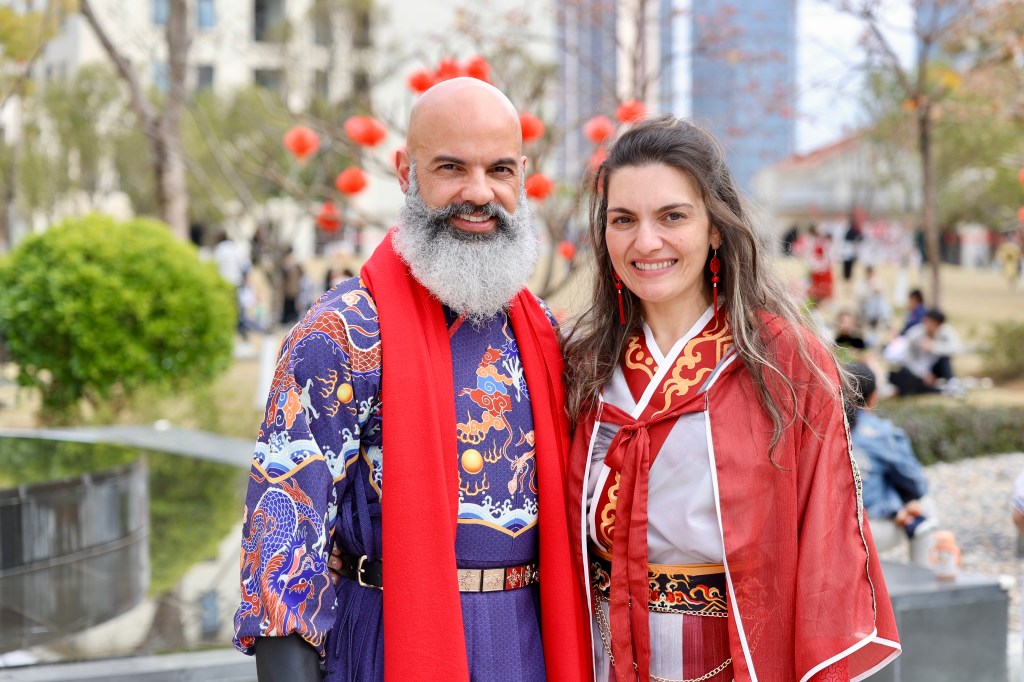
Chinese New Year is more than just a celebration; it is a testament to the enduring spirit of a culture that continues to inspire and captivate. For anyone seeking to explore the heart of China, experiencing the Spring Festival is an unforgettable journey into its soul.
References
Xu Jing. (2024). An Exploration of Traditional Chinese Cultural Programs: The Construction of Rituals, Narrative Strategies, and Experiential Insights. Contemporary Social Sciences, 9(4), 88–104. https://doi.org/10.19873/j.cnki.2096-0212.2024.04.006
Xue, C. (2020). Chinese New Year: The Importance of Tradition and Impact of Governmental Regulation. https://repository.usfca.edu/cgi/viewcontent.cgi?article=2201&context=capstone
Yuqi, W., & Mokhtar, M. (2024). Festival and Visual Art in Ancient China: A Historical Review. Idealogy Journal, 9(1). https://doi.org/10.24191/idealogy.v9i1.507
 Learning, Sharing, and Inspiring